

AdBlue tanks
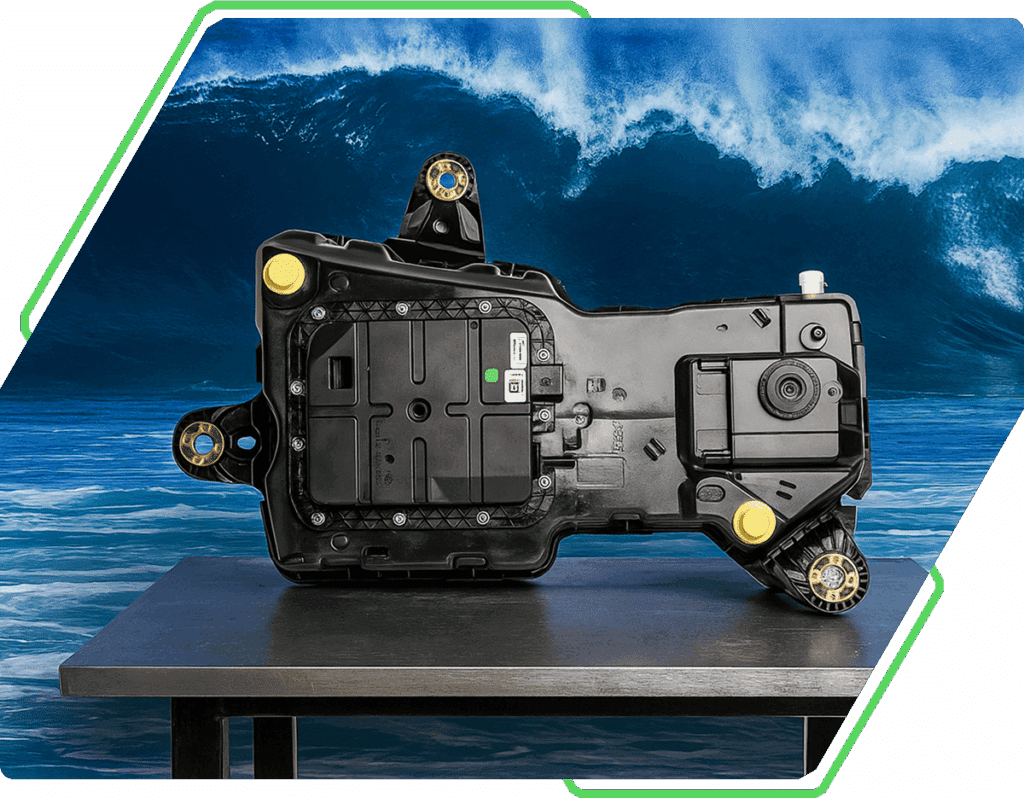
Remanufactured AdBlue Tanks – Technology, Savings and Ecology with RIVOLV
AdBlue tanks play a crucial role in Selective Catalytic Reduction (SCR) systems, which are used in modern diesel-powered vehicles. The SCR system uses a urea solution – AdBlue – to convert harmful nitrogen oxides (NOx) into harmless nitrogen and water vapor. The tank stores the fluid and delivers it in a precisely controlled manner to the injector located before the SCR catalyst. This system is crucial for meeting Euro 6 emission standards.
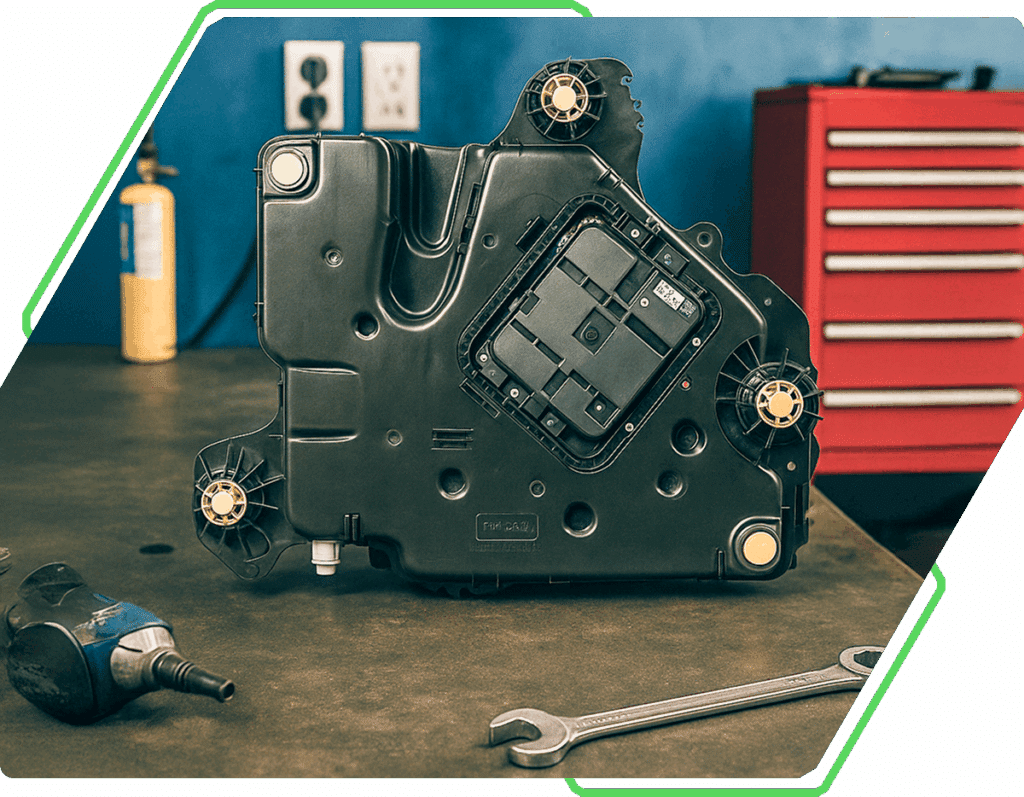
AdBlue Tank Structure
The AdBlue tank is an integrated system consisting of:
- Main tank – made of chemically resistant plastic, resistant to AdBlue,
- Supply pump – responsible for pressurized delivery of the fluid to the system,
- Heating elements – preventing the fluid from freezing at temperatures below -11°C,
- Level and temperature sensors – monitoring the fluid condition,
- Electronic control unit – managing the operation of the entire system,
- Dosing module with filter – responsible for precise dosing of the fluid to the exhaust system.
In PSA/Stellantis brand vehicles (Peugeot, Citroën, Opel), these components are often integrated into one tank module, which makes their replacement costly – hence the growing interest in remanufacturing.
AdBlue System Operating Principle
When the engine reaches the appropriate temperature, the SCR system activates the pump and delivers AdBlue to the injector, which sprays the fluid into the exhaust gases, initiating a chemical reaction. Nitrogen oxides (NOx) are converted into harmless compounds. The entire system is computer-controlled and dependent on engine load, speed, exhaust temperature, and AdBlue level.
Most Common AdBlue Tank Failures
The most common problems include:
- AdBlue freezing – lack of heating can lead to tank cracks,
- System contamination – resulting from the use of non-certified fluid,
- Level or quality sensor failure – resulting in control unit errors,
- Pump or heating module damage – leading to SCR function shutdown.
Often just one of these failures forces the replacement of the entire module – hence the significant importance of remanufacturing as an alternative.
AdBlue Tank Remanufacturing Process
The remanufacturing process follows these stages:
- Initial diagnosis – assessment of damage and degree of wear,
- Tank and line cleaning – removal of contaminants and crystallization deposits,
- Component disassembly – inspection of pumps, heaters, sensors,
- Replacement of damaged parts – with new or refurbished components,
- Assembly and leak and operation tests – including electronic and pressure tests,
- Quality certification – compliant with ISO 9001 standards and OE procedures.
According to Turbo-Tec:
“AdBlue tank remanufacturing allows for maintaining original operating parameters at a significantly lower cost than purchasing a new tank.” (Source: motofocus.pl)
Technological Advantages of the RIVOLV Brand
The RIVOLV brand, available exclusively through Inter Cars, specializes in AdBlue tank remanufacturing and offers:
- OE quality products – confirmed by tests for compliance with manufacturer standards,
- Lower operating costs – savings reaching up to 50% compared to new parts,
- High remanufacturing standard – only components from certified suppliers are used, and each unit undergoes functional tests,
- Quick availability – RIVOLV remanufactured tanks are available in the Inter Cars network throughout Poland and online,
- Sustainable development – reduction of waste and carbon footprint.
As emphasized by the remanufactured products specialist at Inter Cars: “At RIVOLV, we don’t accept compromises – each tank undergoes tests just like a new part. Customers receive OE quality at a much more affordable price.”
Summary:
RIVOLV remanufactured AdBlue tanks are the ideal solution for customers seeking quality, savings and reliability. Thanks to Inter Cars’ extensive distribution network, access to parts is quick and convenient, and quality is guaranteed.


Remanufactured car parts can be even cheaper!
If you return the dismantled part (core) to us, you may receive a refund of your deposit.
Core return policy We offer a 24-month guarantee on all our products.