
Gearboxes
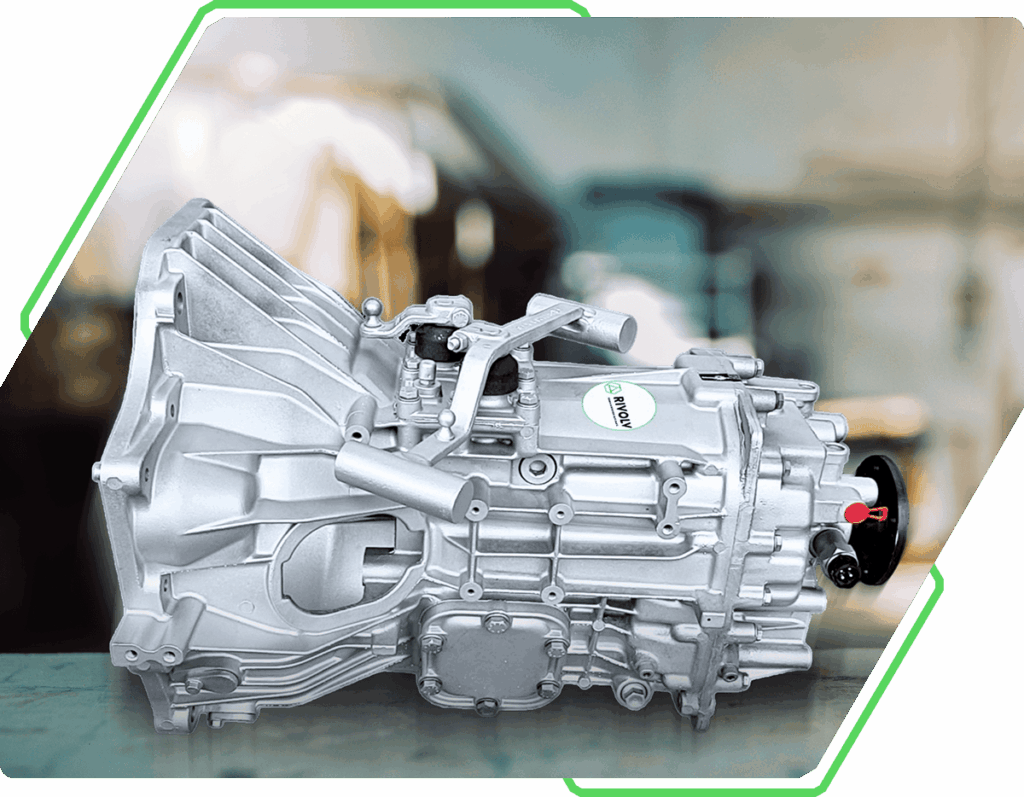
RIVOLV Remanufactured Manual Gearboxes – Technology and Advantages
Introduction: The manual gearbox is the heart of the drivetrain system, determining driving dynamics and efficiency. The RIVOLV brand offers remanufacturing of these assemblies, providing gearboxes restored to factory-new condition. The following article presents the technical aspects of manual gearboxes and the benefits of RIVOLV remanufactured transmissions, based on expert opinions and modern solutions in this field.
Important Technical Information Before Purchase and Installation

Absolutely required is
replacement of the clutch and dual-mass flywheel with new ones if present.
replacement of the release bearing with a new one.
mandatory oil change after the first 2,000 km from gearbox installation.

Verification
of the clutch master cylinder1 for leaks, needle bearing in the flywheel.
1 located in the vehicle above the clutch pedal

Verification
locating sleeves located between the engine and the gearbox. Check whether they are installed in the remanufactured gearbox housing or engine.

Inspection
of gear shift cables (for wear, cracks, corrosion marks, when disconnected from the selector whether they move freely – do not catch). In case of replacement, original cables must be installed. Aftermarket alternatives may have different lengths, which can lead to problems with proper operation of the remanufactured gearbox.

Checking
of the lever in the cabin – for visible signs of wear and whether there is any play,
connections and tightening of mounting bolts,
drive shafts and drive shaft splines – for visible signs of wear, abrasions on the surface where the seal works with its surface. Leaving these damaged parts may cause oil leakage from the remanufactured gearbox despite replacing the seals with new ones.

Important
If the customer does not agree to their replacement, then no warranty will be provided for the installed gearbox.
Final WorkRetry
Filling the remanufactured gearbox with the appropriate amount of oil with the specification recommended by the vehicle manufacturer.
Test drive and checking for possible leaks.
The Role of the Manual Gearbox
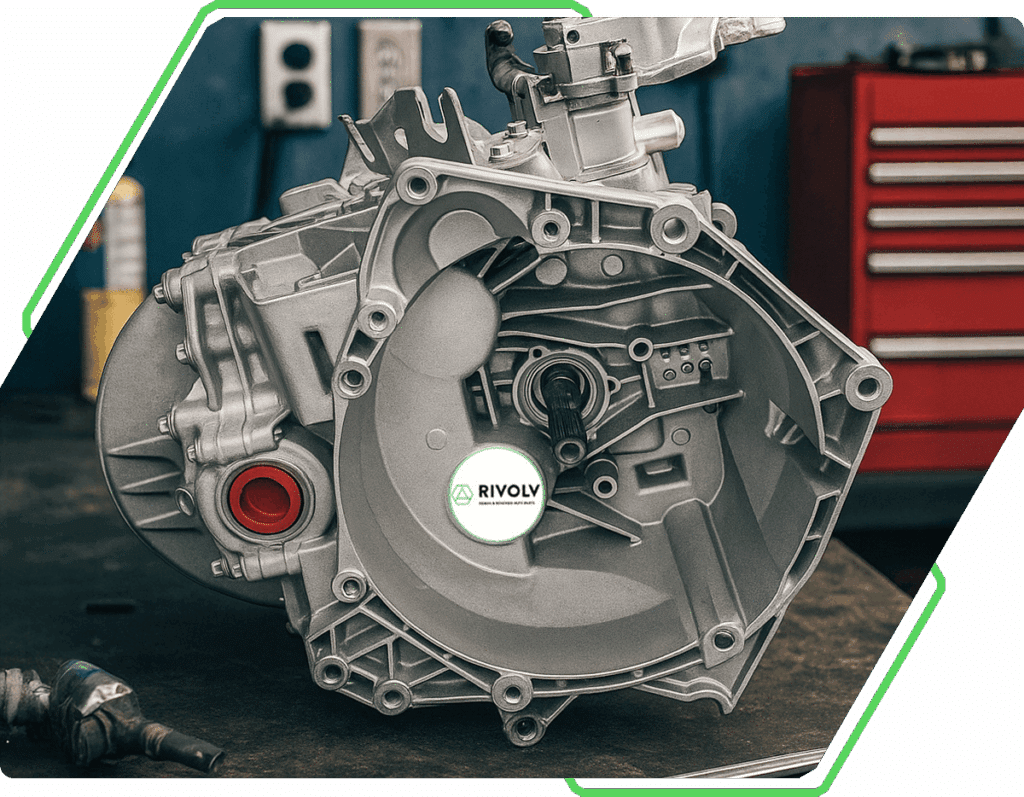
The manual gearbox plays a crucial role as an intermediary between the engine and the vehicle’s wheels – it enables efficient transfer of power generated by the drive unit to the road. Through a set of gear ratios, it allows adjusting the rotational speed of the wheels to driving conditions and engine characteristics, ensuring smooth starting, uphill driving, and the ability to reverse. Thanks to variable gear ratios, the driver can keep the engine in the optimal RPM range, which translates into smooth driving and lower fuel consumption.
In the case of a manual gearbox, it’s the driver who decides when to change gear and which gear to select, providing full control over the vehicle and a direct connection with the machine – a feature valued by many sports driving enthusiasts. Additionally, manual transmissions are valued for their high durability and lower servicing costs compared to automatics – their design is simpler, and potential repairs are cheaper. As a result, a well-maintained manual gearbox can run trouble-free for hundreds of thousands of kilometers, providing the driver with confidence and control over the vehicle’s performance.
Manual Gearbox Structure
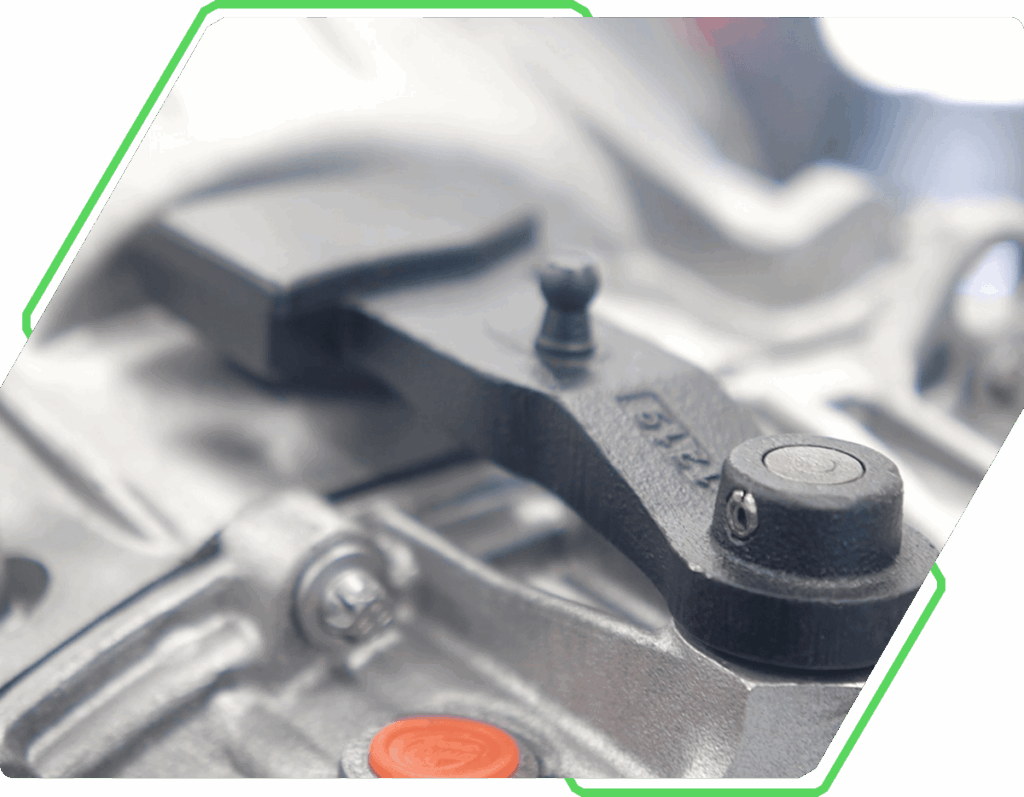
Interior of a manual gearbox (manual transmission) with visible gears on shafts and the gear change mechanism.
A manual gearbox is a complex mechanical system composed of precisely manufactured components. Its main components are a solid housing (the so-called gearbox casing), a complete set of shafts with gears, synchronizers, and a gear change mechanism with a control lever. The housing provides a rigid structure that maintains all subassemblies in axial alignment and protects them while keeping the lubricating oil inside. The differential mechanism is also mounted to the housing, although in front-wheel drive vehicles (where the gearbox is integrated with the differential mechanism) and rear-wheel drive vehicles (where the “differential” is located separately), these solutions may differ.
Shafts and gears:
In a typical manual gearbox, there is a clutch (input) shaft connected to the engine via the clutch, a main (output) shaft transmitting torque to further drive components, and an intermediate shaft (the so-called layshaft). Gears of various sizes are mounted on these shafts, forming pairs for each gear. The gears of one shaft mesh with the gears on the second shaft – each pair corresponds to a different ratio. An additional, smaller set of gears (often with a separate intermediate shaft) is provided for reverse gear, which allows reversing the direction of rotation and driving backwards. All gears in modern manual gearboxes are constantly meshed (the so-called constant mesh gearbox) and have helical teeth – this solution increases load resistance and reduces noise and vibrations during transmission operation.
Synchronizers:
For gear changes to occur quickly and without grinding, each gear pair (except reverse) is equipped with a synchronizer. A synchronizer is a small friction mechanism placed between the gear and the shaft; its task is to equalize the rotational speed of the meshing gears before they fully engage. When the driver selects a gear, the synchronizer slows down or speeds up the rotation of the given gear, matching it to the shaft speed – only then do the gears mesh without collision. Thanks to synchronizers, gear changes are smooth, fast, and shock-free, which not only improves comfort but also protects the gear teeth from damage.
Gear change mechanism:
This is a system of rods, shift rails, and forks connected to the gear lever (shift lever), by which the driver selects gear ratios. Moving the lever causes the corresponding forks to move, which engage (via the synchronizer) the selected gear with the main shaft, engaging the given gear while simultaneously disengaging the previous one. This mechanism also includes locks to prevent accidental engagement of incorrect ratios. The entire system is lubricated with transmission oil contained in the gearbox – the appropriate level and quality of oil are critical for the durability of synchronizers and the bearings on which the shafts rotate.
Manual Gearbox Operating Principle
The manual gearbox is a type of stepped transmission – the torque is changed in steps by selecting successive gears.
The gear ratio (the ratio of the teeth of the driving gear to the driven gear) determines how rotational speed is converted into torque: a lower gear (e.g., 1st or 2nd) has a ratio higher than 1:1, which results in increased torque at the wheels at the expense of speed – this allows starting from a standstill and accelerating with great force. Higher gears, on the other hand, may have lower ratios, even below 1:1 (overdrive), which reduces torque at the wheels but enables driving at high speed with lower engine RPM. Thanks to this, the gearbox keeps the engine in the appropriate RPM range regardless of conditions – lower gears are used when starting and driving slowly, while the highest gears ensure economical highway driving.
Torque transmission:
When the engine is running, its torque first reaches the clutch, and from there to the gearbox input shaft. In neutral (idle), no gear is engaged – the gears on the shafts rotate freely but do not transmit drive to the output shaft. During a gear change, the driver presses the clutch pedal, which temporarily disconnects the engine from the gearbox and enables synchronization of the gears for the new ratio. Moving the lever selects the appropriate pair of gears – for example, for first gear, a small gear on the input shaft meshes with a large gear on the intermediate shaft, which greatly reduces speed and increases output torque. The synchronizer equalizes the speeds of these gears, after which the mechanism locks them together, causing torque to flow from the input shaft, through the meshed gears, to the output shaft and then to the vehicle’s drive wheels. Releasing the clutch reconnects the gearbox to the engine, transmitting drive to the wheels. With each subsequent gear change, the process repeats: the previous gear is disengaged, the synchronizer matches speeds for the new ratio, and the next pair of gears engages.
In practice, engaging one gear causes complete disengagement of the previous one, so two gears are never engaged simultaneously. The selection mechanism ensures that only one synchronized gear pair is locked with the main shaft at any given time. Reverse gear deserves special attention – its engagement requires introducing an additional gear (the so-called intermediate gear) between the gears, which reverses the direction of rotation of the output shaft. Typically, reverse gear has no synchronizer (which is why it’s often necessary to completely stop the car when engaging reverse to avoid grinding).
The operation of a manual gearbox is therefore based on sequential transmission of torque through different sets of gears. This makes efficient use of engine power possible: when starting and accelerating, low gears multiply torque, and when driving at a constant high speed, high gears reduce engine RPM, ensuring quieter operation and fuel economy. The entire system requires proper operation – smooth clutch operation and appropriate selection of gear ratios for the road situation. In return, the manual transmission rewards the driver with a direct feeling of power and precise control over the vehicle, which is the quintessence of the pleasure of driving a car with a “manual.”
Most Common Manual Gearbox FailuresRetry
Despite their high durability, manual gearboxes are subject to operational wear and may fail. A well-designed and maintained mechanical transmission can cover even over 500,000 km without a serious failure.
However, when problems do occur, they most often result from improper use or (less frequently) hidden manufacturing defects. Below are typical manual gearbox failures, their causes, and prevention methods:
- Shaft bearing wear or damage: Manifests as loud gearbox operation (humming, whining) particularly in neutral or specific gears. Causes often include high mileage, oil shortage, or material defect. Prevention: regular transmission oil changes and avoiding gearbox overloading; mechanics recommend oil changes every ~80–100,000 km to extend transmission life.
- Synchronizer wear: Manifests as grinding when changing gears, especially during quick gear shifts. The cause may be aggressive driving (sudden gear changes without full clutch disengagement) and service neglect – e.g., using inappropriate oil or lack of oil changes. Prevention: smooth gear changes using the clutch and timely oil changes to manufacturer-recommended specifications (maintaining the friction properties of the oil is crucial for synchronizer operation).
- Gear tooth wear or breakage: Can cause gear jumping or complete loss of a given gear. Usually caused by sudden mechanical overloads (e.g., drivetrain jerking, aggressive starts with tire squealing) or prolonged operation on damaged bearings or synchronizers. Prevention: avoiding brutal treatment of the drivetrain – smooth starting and adjusting engine speed during downshifts (double-clutching technique in older gearboxes without good synchronizers).
- Gear change mechanism failure (cables, linkages, shift rails): Manifests as difficulty engaging gears or “losing” gears (lever returns to neutral). The cause may be wear or breakage of cables/linkages, worn selectors, or damage to lever mounting elements. Prevention: periodic inspection and adjustment of the gear change mechanism, replacement of worn cables; avoiding excessive force on the lever when changing gears.
- Transmission overheating or seizure (oil shortage): Symptoms include gearbox overheating, difficulty changing gears, and characteristic smell of burnt oil. The reason is transmission oil leakage or lack of oil changes for a very long time, which causes loss of lubricating properties. Without oil, cooperating metal elements seize. Prevention: periodic checking of oil level in the gearbox and immediate seal repair when leaks are noticed; preventive oil changes according to recommendations.
- Clutch slippage and dual-mass flywheel damage: Although the clutch and dual-mass flywheel are not formally part of the gearbox itself, their condition has a direct impact on transmission operation. A worn or poorly adjusted clutch can cause difficulty changing gears and accelerated synchronizer wear (incomplete drive disconnection). A damaged dual-mass flywheel generates vibrations and shock overloads transmitted to the gearbox. Prevention: timely replacement of the complete clutch set when signs of wear appear (e.g., slippage, jerking) and care for the dual-mass flywheel – avoiding sudden changes in engine load and driving at too low RPM, which will extend the life of this component.
In summary, most manual gearbox failures can be prevented through proper operation and maintenance. Key factors are appropriate use of the clutch and gears, maintaining proper oil level and cleanliness, and quick response to first symptoms (noises, difficulty changing gears). Experts emphasize that regular transmission oil changes every several tens of thousands of kilometers significantly extends the mechanism’s durability. However, when a serious failure occurs, the driver faces a choice: repair, replacement with a used part, purchase of a new gearbox, or factory remanufacturing.
An increasingly popular option – combining quality with cost-effectiveness – is professional manual gearbox remanufacturing, offered in Poland by, among others, the RIVOLV brand.
Manual Gearbox Remanufacturing at RIVOLV
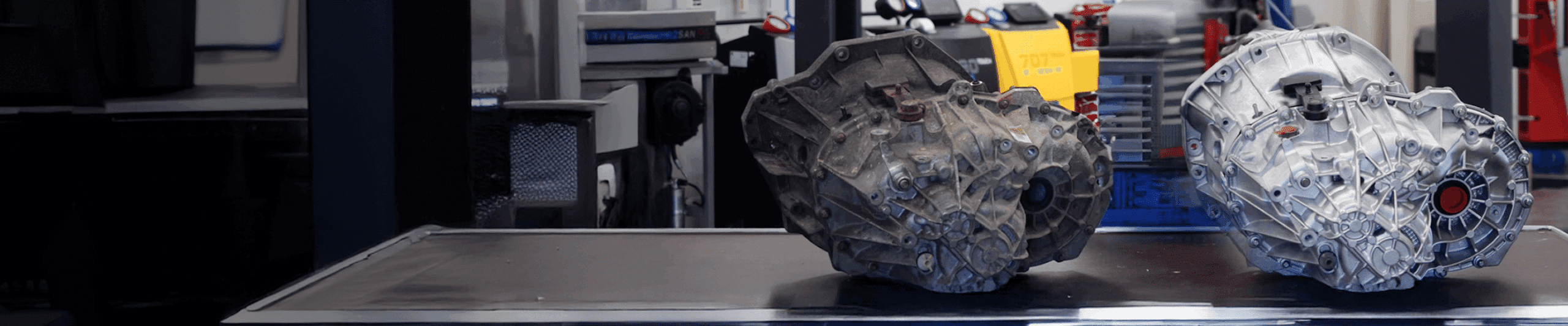
Remanufacturing (factory rebuild) of a gearbox is a complex technical process that restores a used assembly to an almost factory-new condition.
Unlike ad-hoc repair involving only the replacement of damaged parts, full remanufacturing means a comprehensive inspection and renewal of the entire gearbox. In the first stage, the RIVOLV gearbox is completely disassembled into individual parts. Each component is thoroughly cleaned (using mechanical and chemical washing, including high-pressure washers, ultrasonic cleaners) and subjected to inspection for wear and damage.
Key components that are always replaced with new ones include bearings for all shafts, seals (oil seals), and small fastening elements. Standard practice also includes replacement of the complete set of synchronizers and any worn gears or shafts if their condition deviates from the norm.
In the RIVOLV remanufacturing process, original spare parts or their improved equivalents are often used so that the renewed gearbox meets factory strength parameters. For example, if a given series of gearboxes had a factory defect (e.g., bearings or synchronizers that were too weak), improved components in terms of material or design are installed during remanufacturing – thanks to this, the remanufactured gearbox is free from original shortcomings. Experts confirm this: good remanufacturing means setting all clearances and mechanical tolerances according to new part specifications, which translates into durability and operating quality comparable to a factory-new assembly. Moreover, during remanufacturing, all components can be updated to the latest technological versions, which often means that the renewed gearbox incorporates improvements introduced by the manufacturer after the original was released.
After replacing worn elements comes the stage of precise gearbox assembly.
RIVOLV has specialized tools and measuring instruments that enable precise adjustment of all assemblies (e.g., proper bearing preload, gear backlash corrections). During assembly, torque wrenches and devices for setting the position of gear change mechanisms are used so that the transmission operates smoothly and according to design specifications. After assembly, before the gearbox reaches the customer, each unit undergoes rigorous functional testing. On a special test stand, the operation of all gears, smoothness of shifting, absence of disturbing sounds, and gearbox tightness are checked. The transmission is connected to a drive simulating operation in a vehicle, which allows detection of any irregularities before the gearbox is installed in the car. Only after successfully passing the tests is the RIVOLV gearbox considered remanufactured to “like new” standard.
As part of the process finalization, the gearbox housing is often subjected to aesthetic and protective treatments – sandblasting and painting.
Thanks to this, the renewed gearbox looks factory-new and is protected against external corrosion. Each RIVOLV gearbox receives new transmission oil with parameters recommended by the manufacturer, so that it operates under optimal conditions from the first kilometers. RIVOLV remanufactured gearboxes are then packaged and prepared for installation in the customer’s vehicle, often in a core exchange system – the worn gearbox is returned as credit, receiving a remanufactured one in return (thanks to this, the cost is lower, and the used assembly goes for rebuilding again, fitting into the circular economy concept).
Benefits of RIVOLV remanufactured gearbox vs. new:
By choosing a factory-remanufactured gearbox, the customer gains a number of tangible advantages.
- First and foremost is significant financial savings – a remanufactured part costs significantly less than a factory-new one, while offering comparable durability and performance.
- RIVOLV provides a two-year warranty on its remanufactured gearboxes, which confirms the certainty of quality and reliability of these products.
- According to experts, a properly remanufactured gearbox can serve almost as long as a new system, allowing avoidance of high costs of purchasing a new part.
- At the same time, the driver will not feel any difference in vehicle operation – technical parameters and driving experience are restored to their original state. The remanufactured transmission operates smoothly, gears engage easily and precisely, eliminating symptoms of previous use such as catching or gear popping out.
- Thanks to the replacement of worn components, the gearbox regains its original efficiency, which translates into smooth driving and confidence in vehicle handling.
Environmental benefits are also significant – remanufacturing a used gearbox requires consumption of significantly less raw materials and energy than producing a new part from scratch. By choosing a RIVOLV product, we therefore support sustainable development by reducing waste and emissions associated with production. RIVOLV, as a brand specializing in automotive component remanufacturing, uses state-of-the-art technologies and specialist expertise to ensure that each renewed gearbox meets high quality standards. This process – combining engineering knowledge, precision of execution, and quality control – makes RIVOLV remanufactured manual gearboxes an attractive alternative to new parts. It’s a solution that guarantees durability, efficiency, and innovation, while being friendly to the customer’s wallet and the natural environment.
Summary:
The manual gearbox is a component of enormous importance for the operation and performance of a car. Its construction – consisting of precise mechanisms of gears and synchronizers – provides the driver with full control over the use of engine power. When properly operated, it rewards with long and trouble-free operation. However, when time or intensive driving leave their mark on it, remanufacturing at RIVOLV allows breathing new life into the gearbox. RIVOLV remanufactured manual gearboxes are characterized by durability comparable to new units, high operational efficiency, and use of all available material and design innovations that eliminate the flaws of the original. Expert and user opinions confirm that a professionally renewed gearbox can serve for a long time, ensuring problem-free gear changes and driving safety. Choosing such a solution is not only savings and care for the environment, but also a guarantee that our vehicle’s drivetrain will remain in excellent condition for years to come.


Remanufactured car parts can be even cheaper!
If you return the dismantled part (core) to us, you may receive a refund of your deposit.
Core return policy We offer a 24-month guarantee on all our products.